
The Falcon and the Rose: The Falcon
Could the falcon in Deborah Harkness’s title be pointing us toward Anne Boleyn?

In our last article we began looking at the title of Deborah Harkness’s next novel in the All Souls world — The Falcon and the Rose — and the first symbol that seemed to offer a historical clue.
The rose.
In Tudor England, the rose became the emblem of the dynasty that emerged from the Wars of the Roses, eventually leading to the reign of Elizabeth I, whose court Diana and Matthew enter in Shadow of Night.
But the title contains two symbols.
If the rose connects us to Tudor history, the next question is the falcon.
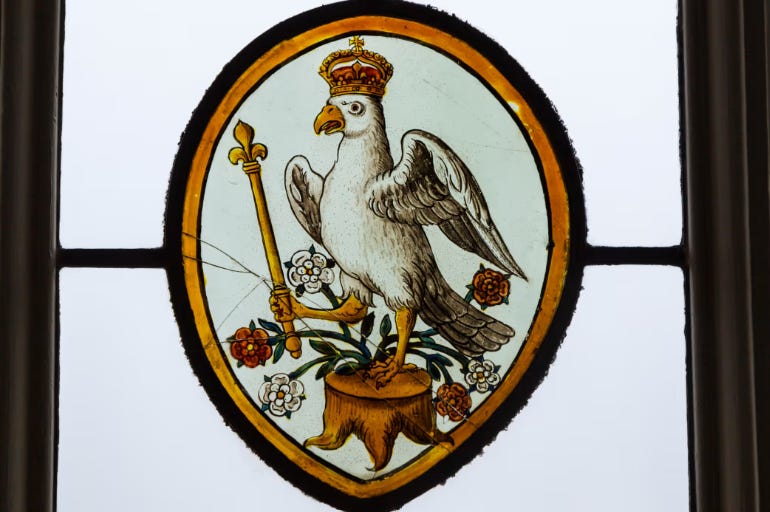
And in Tudor symbolism, one falcon stands out immediately.
Anne Boleyn’s Falcon
Before she became queen, Anne Boleyn adopted a heraldic badge that was both striking and unusual.
A white falcon crowned and holding a sceptre.
The image appeared widely once Anne rose to prominence at Henry VIII’s court. It could be seen in, decorative motifs at Hampton Court Palace, royal badges worn by supporters, manuscripts and courtly decoration associated with her household
The symbolism was carefully chosen.
The crowned falcon represented Anne’s rise in status and her claim to queenship. In Tudor heraldry, birds of prey often symbolized vigilance, authority, and controlled power.
Anne’s falcon also carried a visual metaphor. The bird was often depicted emerging from a tree stump, suggesting renewal and transformation, a powerful statement for a woman whose rise at court reshaped English politics.
The Falcon and Elizabeth’s World
Anne Boleyn’s falcon did not remain a public symbol for long. After her execution in 1536, much of the imagery associated with her was removed from royal display.
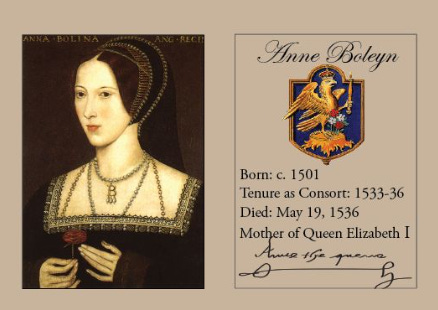
But her legacy remained.
Her daughter, Elizabeth I, would eventually rule England for more than four decades, presiding over one of the most intellectually vibrant courts in Europe.
That court is central to the All Souls world. In Shadow of Night, Matthew moves quietly through Elizabeth’s circle under the name Matthew Roydon, interacting with scholars, courtiers, and natural philosophers.
If the rose in Deborah Harkness’s title points toward the Tudor dynasty, Anne Boleyn’s falcon offers a compelling counterpart — a symbol connected directly to the lineage that produced Elizabeth.
Why the Falcon Matters
Deborah Harkness frequently builds her fiction around real historical symbols and intellectual networks.
Which makes the pairing of falcon and rose particularly interesting.
Together, they evoke the political and dynastic world that shaped Tudor England — a world where symbols carried meaning and power.
It is also a world Deborah Harkness has already explored through Diana and Matthew’s time in Elizabethan England.
If you enjoy wandering deeper into the worlds behind the books we love, subscribe below.