

Some of the most interesting words in The Black Bird Oracle guidebook appear beneath a very ordinary object: The Box.
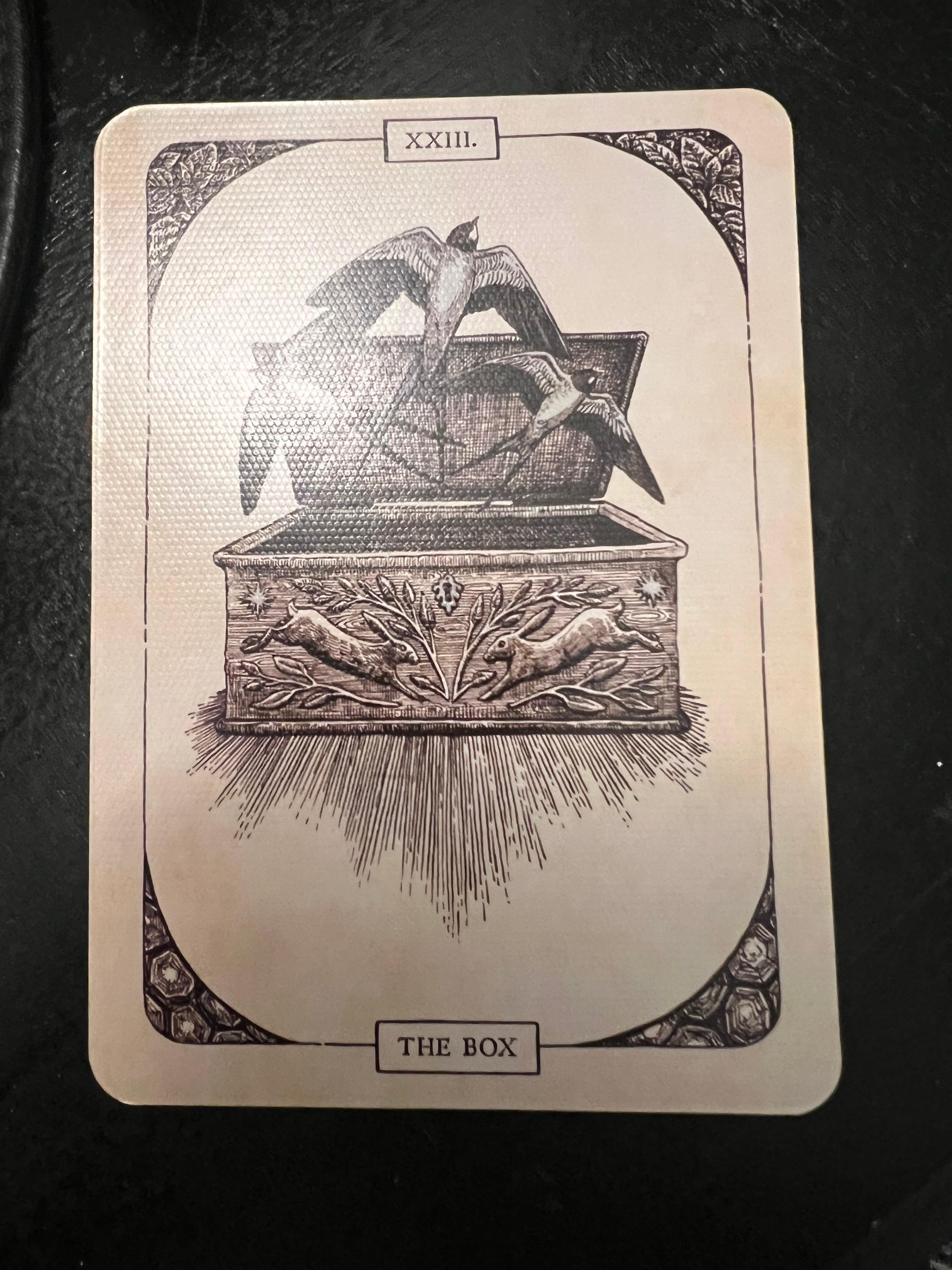
Personal baggage. The unknown.
The idea of personal baggage immediately made me think about All Souls, because almost no one enters Deborah Harkness’s world carrying only the life they chose for themselves. Her characters inherit families, abilities, expectations, old wounds, secrets, responsibilities, and sometimes consequences created generations before they were born.
The question isn’t whether they have baggage. It’s what they decide to do with it.
Matthew may be the clearest example.
Long before Diana enters his life, Matthew is carrying things he didn’t choose. There are Philippe’s expectations and the complicated responsibilities of being a de Clermont, but there is also something far more personal: his blood rage.
Matthew inherited it.
He didn’t choose the condition, but he has spent centuries living with the consequences of having it. His fear of what he might do becomes part of how he understands himself, and the guilt attached to his past becomes something he continues to carry even when the people who love him see far more in him than his worst moments.
Matthew’s box contains inheritance and guilt tangled so tightly together that he sometimes struggles to distinguish between them.
Sarah Bishop carries something very different.
When we first meet Sarah, she’s one of the people who taught Diana what family could look like after the deaths of Rebecca and Stephen. She and Emily step into a life that was changed by tragedy and help raise a child whose magical abilities, and refusal to use them, come with questions no one can easily answer.
But Sarah also carries the history of the Bishop family itself.
She knows what it means to come from a family of witches. She understands its traditions, its expectations, and some of its wounds. Unlike Diana, she doesn’t try to close the door on that inheritance. She lives inside it.
What makes Sarah interesting is that she doesn’t carry the past quietly. She argues with it. She protects it. She questions it. And when circumstances force her to reconsider things she thought she understood about her own family, she has to decide which beliefs still deserve a place in the box.
Marcus inherits another kind of burden.
He becomes a vampire because Matthew makes him one, bringing him into a family whose history began thousands of years before Marcus was born. Suddenly he belongs to the de Clermonts, but he didn’t grow up with their rules, their grudges, or their understanding of what family requires.
In some ways, that makes Marcus one of the most interesting characters through which to examine inheritance.
He receives the family without receiving the childhood that would have taught him how to belong to it.
Over time, Marcus has to decide what being Matthew’s son means, what being a de Clermont means, and which parts of that enormous legacy he wants to carry into his own relationships. His life with Phoebe offers the possibility of doing something different—not rejecting the family, but refusing to assume that everything inherited must remain unchanged.
And then there’s Jack.
Few characters in All Souls have a box packed for them as completely as Jack does.
He begins as a child shaped by abandonment and the brutal realities of Elizabethan London. Diana and Matthew give him a family, only to disappear from his life when they return to their own time. Other people then make choices that alter his future again, leaving Jack to live with consequences he never had the power to choose.
By the time we encounter him again, Jack is carrying centuries of loss, violence, love, loyalty, and confusion.
Yet Jack is never simply the sum of what happened to him.
That’s what makes him so important to this card.
The Box could easily become a metaphor for trauma - the burdens everyone drags behind them. But All Souls is much more interesting than that. Deborah Harkness repeatedly gives her characters inherited histories and then asks what they will do with them.

Matthew doesn’t have to become Philippe.
Marcus doesn’t have to become Matthew.
Diana doesn’t have to become Rebecca.
Jack doesn’t have to remain the person other people tried to make him.
Sarah can honor the Bishops without accepting every belief handed down through the family.
Inheritance matters enormously in All Souls. Bloodlines matter. Families matter. History matters.
But inheritance is rarely destiny.
Maybe that’s the distinction The Box makes me notice most.
We don’t get to choose everything placed inside it. Some things arrive before we’re old enough to understand them. Others are handed to us by parents, families, circumstances, or people who made decisions on our behalf.
Eventually, though, the box becomes ours.
And then we have to decide what we’re going to keep.
Your Draw
Matthew, Sarah, Marcus, and Jack all inherit parts of lives they didn’t choose. Which All Souls character do you think does the best job of deciding what to keep and what to leave behind?