

Experience The Black Bird Oracle Special Series in a new way. Click the READ IN APP button to open this article in the Substack app, then tap Listen to hear this article’s audio companion - perfect for when you’d rather listen than read. Because sometimes, the words we need are meant to be heard.
The Skeleton is one of the least mysterious cards in The Black Bird Oracle—at least at first glance.

Deborah Harkness gives it three words:
Building. Structure. Support.
A skeleton is what remains when everything else is stripped away. It gives the body its shape, supports everything built around it, and allows the whole to keep standing.
That made me think immediately about the de Clermonts.
They are one of the great families of All Souls, but they aren’t exactly a conventional one. They span thousands of years. Their members aren’t connected by blood alone. Some were born into the family, others were made vampires and brought into it. There are marriages, matings, adoptions, branches, alliances, old resentments, enormous loyalties, and disagreements that can last for centuries.
Philippe built something extraordinary.
But after Philippe is gone, what actually holds it together?
The obvious answer might be Baldwin.
As Philippe’s surviving son and head of the family, Baldwin inherits much of the responsibility for maintaining the structure Philippe created. He takes that responsibility seriously—sometimes so seriously that the rest of the family experiences his protection as control.
Baldwin believes rules matter. Hierarchy matters. Obligations matter. Someone has to protect the family’s interests even when doing so makes that person unpopular.
In that sense, Baldwin behaves very much like a skeleton. He is rigid because he believes rigidity is what keeps the structure standing.
But a skeleton isn’t enough to make a family.
Which brings me to Ysabeau.
If Baldwin provides structure, Ysabeau provides something different: continuity.
She remembers.
She knew Philippe not as a legendary patriarch but as her mate. She remembers the people who have disappeared from the family, the relationships that changed, the mistakes that were made, and the histories younger members know only as stories.
Sept-Tours itself seems to embody that role. People leave. They return. New members arrive. Relationships change. Yet Ysabeau remains, connecting the family that exists now to the one Philippe once knew.
Her authority doesn’t come from a title.
It comes from memory.
Then there is Fernando.
Fernando is particularly interesting because he exposes one of the weaknesses in the structure Philippe created.
He loved Hugh. He was Hugh’s mate. He belongs to the family emotionally and historically, yet the rules governing creatures prevented that relationship from being recognized in the way it deserved.
And still Fernando remains connected to the de Clermonts.
That makes him important.
Families often reveal what they truly value not through the people who fit comfortably within their structure, but through the people the structure wasn’t designed to accommodate.
Fernando forces us to ask whether belonging is determined by rules—or by relationships.
Marcus raises the same question from another direction.
Marcus inherits the de Clermont family through Matthew, but he doesn’t simply reproduce it. He creates new relationships and new communities, and his choices repeatedly challenge the idea that preserving a family means keeping it exactly as it was.
That may be one of the biggest tensions running through the de Clermont story.
Baldwin’s instinct is often to preserve.
Marcus’s is often to change.
Both believe they are protecting something important.
And perhaps both are necessary.
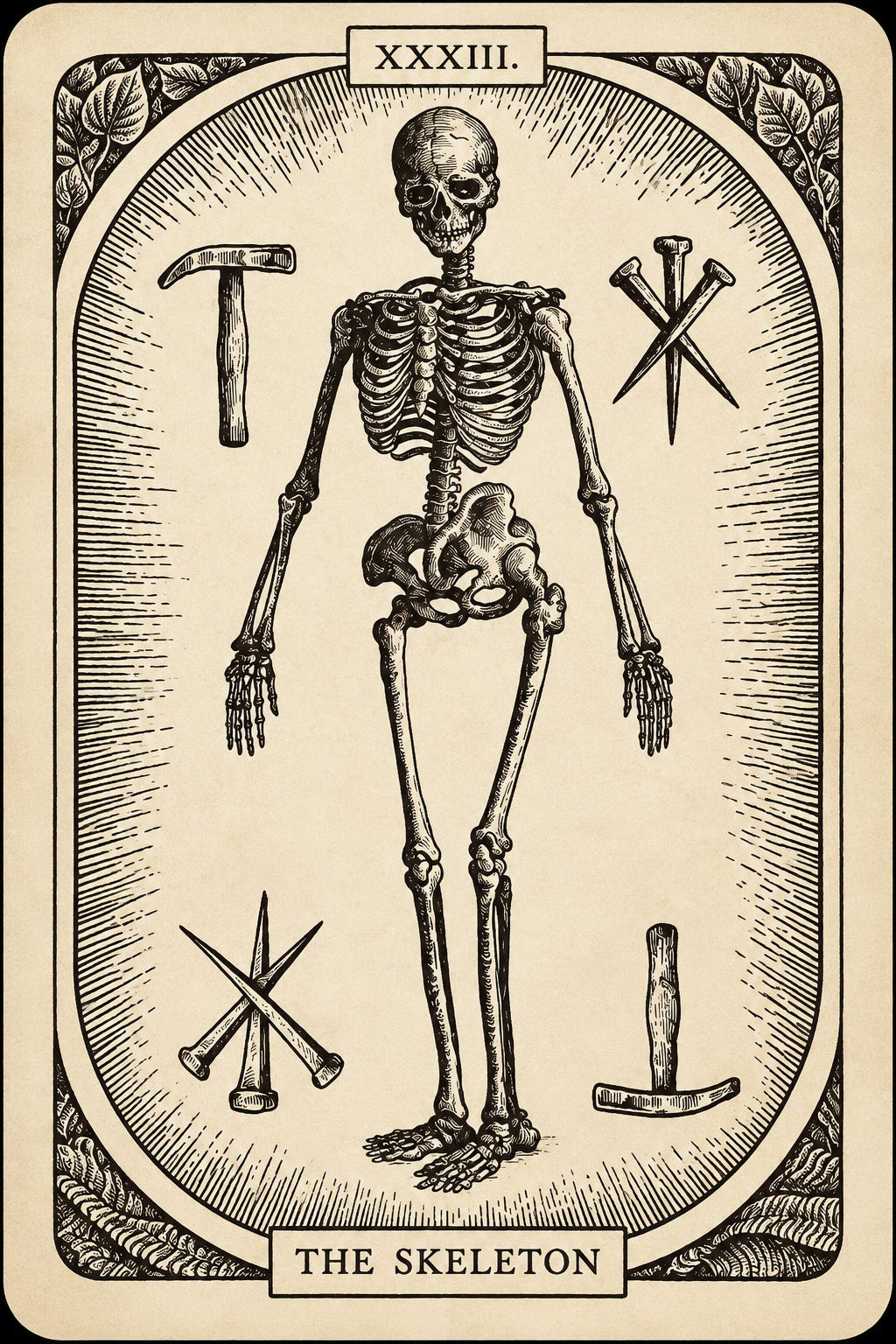
A skeleton provides structure, but living bodies aren’t rigid. Joints bend. Bones grow. Old tissue is constantly replaced. A structure that cannot adapt eventually becomes something very different from support.
It becomes a cage.
That may be the most interesting way to think about the de Clermont family.
Philippe created the original structure, but he isn’t what keeps it alive centuries later. Baldwin provides order. Ysabeau provides memory. Fernando reminds the family that love can exist beyond the boundaries its rules once recognized. Marcus pushes those boundaries outward and asks what the family might become next.
And there are others doing the same thing.
Phoebe chooses to enter this complicated family. Jack finds his way back into it. Miriam and other longtime allies occupy spaces that blur the distinction between family and friendship. New generations arrive who will inherit the de Clermont name without necessarily inheriting all of its assumptions.
The family survives because its structure is strong.
But it survives just as importantly because that structure can change.
Maybe that’s what The Skeleton makes visible.
When everything else is stripped away—the titles, the bloodlines, the rules, even Philippe himself—the de Clermonts aren’t held together by one person.
They’re held together by the accumulated choices of people who continue, despite everything, to claim one another as family.
Your Draw
If Philippe created the de Clermont family, who do you think has done the most to keep it together since his death—and is that the same person who has done the most to help it change?