

One of the most surprising things about The Odyssey isn’t the monsters or the adventures. It’s how often the story stops so people can eat.
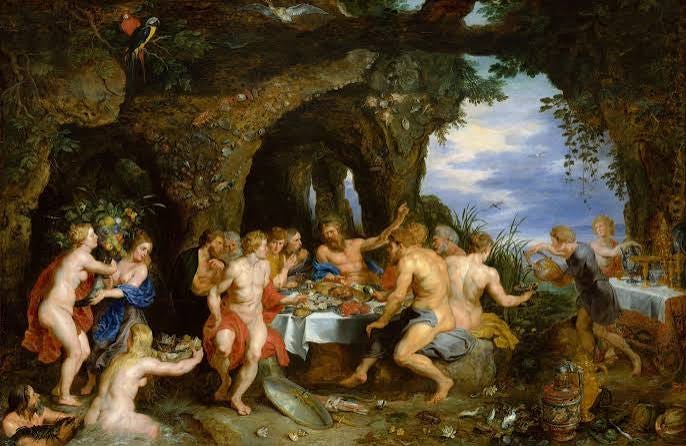
Again and again, Odysseus arrives somewhere unfamiliar. Before anyone asks who he is, where he has come from, or why he is there, he is offered food, wine, a bath, and a place to rest. Only after those needs have been met do the questions begin.
To modern readers, these scenes can feel repetitive. To Homer’s audience, they represented one of the most important values in Greek society.
The Greeks called it xenia.
The word is often translated simply as “hospitality,” but that doesn’t quite capture its meaning. Hospitality today usually suggests courtesy or generosity. Xenia was something much deeper. It described a sacred relationship between host and guest, one protected by Zeus himself. To welcome a stranger, offer food, provide shelter, and ensure their safe departure was not merely an act of kindness. It was a moral responsibility.
That obligation extended to both people.
The host offered protection and generosity.
The guest responded with respect, gratitude, and trust.
Together they created a relationship that could last for generations.
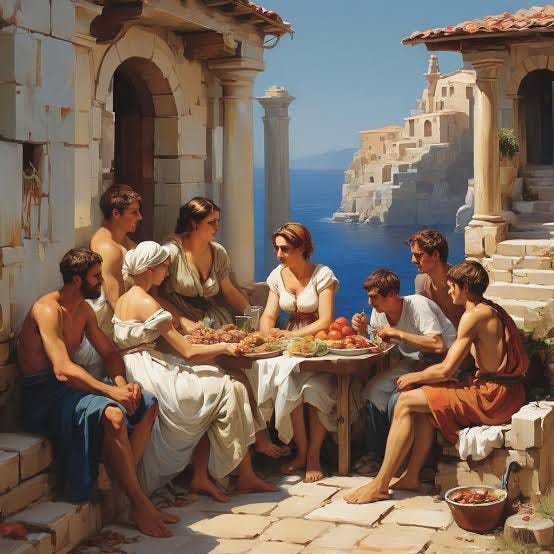
Once you recognize xenia in The Odyssey, you begin to notice how often Homer uses it to reveal character. The best hosts are generous without hesitation. The worst violate the rules completely. The suitors who occupy Odysseus’s home do more than overstay their welcome—they abuse the sacred bond between host and guest by consuming his food, disrespecting his household, and exploiting Penelope’s hospitality. Their behavior is offensive not simply because it is rude, but because it threatens the moral order of the oikos itself.
Reading those scenes made me think about Sept-Tours.
Throughout All Souls, Philippe’s home is more than a family estate. It is a place where alliances are formed, guests are protected, difficult conversations take place, and relationships are tested. People are welcomed, fed, and, perhaps most importantly, brought under Philippe’s protection.
Those scenes are easy to read as expressions of generosity.
I wonder if they are something more.
Like Homer, Deborah Harkness often uses hospitality to reveal character. Who is welcomed? Who is trusted? Who is offered a place at the table? Those choices tell us as much about Philippe as any battle or political negotiation.
What strikes me most is that Philippe rarely separates hospitality from responsibility. Once someone enters his household, he assumes obligations toward them. He may not always be warm. He may not always be easy to understand. But he consistently acts as though the role of host carries duties that cannot simply be set aside when they become inconvenient.
That idea feels deeply ancient.
Today we often think of hospitality as optional. We invite people into our homes because we enjoy their company or because the occasion calls for it. Philippe’s world operates differently. Hospitality creates relationships, and relationships create obligations. Once those obligations exist, they endure.
That perspective also helps explain why meals occupy such an important place in All Souls. Some of the most significant conversations in the series take place around a table. Families argue. Alliances are negotiated. Guests become friends. Trust is built one shared meal at a time.
Food is rarely just food.
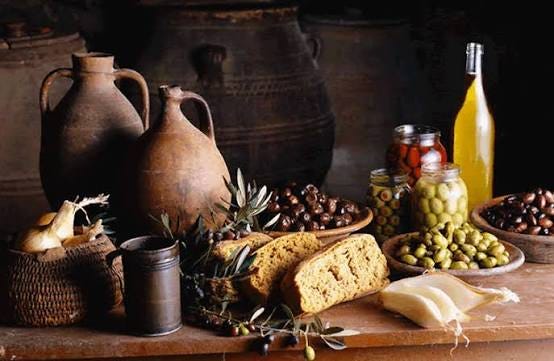
The table becomes part of the story.
Perhaps that’s why The Odyssey spends so much time describing meals that modern readers sometimes skim past. Homer understood that a shared table was where strangers became allies and where households revealed the values they lived by.
Deborah Harkness understands the same thing.
The next time I read the scenes at Sept-Tours, I suspect I’ll pay less attention to what is being served and more attention to who has been invited to the table.
Hospitality, it turns out, may be one of the oldest forms of storytelling.
It tells us exactly who we are.
Read It Again
The next time you read a meal at Sept-Tours, resist the temptation to treat it as a pause in the story. Instead, notice who is welcomed, who sits together, who serves, and who is protected. Deborah Harkness rarely uses the dinner table simply as a setting. Like Homer, she uses it to reveal relationships, establish trust, and show us the values that holds the De Clairmont household together.