

One of the greatest challenges in reading historical fiction—or characters who have lived through history—is resisting the temptation to judge them by modern standards. We naturally assume that people have always thought about family, leadership, love, and responsibility the way we do. Yet those ideas have changed dramatically over time, and one of the most significant differences between Homer’s world and our own is the meaning of the family itself.
Today, we often think of family as a group of individuals connected by love and shared experiences. We celebrate personal choice, encourage independence, and generally believe that parents should prepare their children to build lives of their own. These values are so familiar that they can feel timeless.
They aren’t.
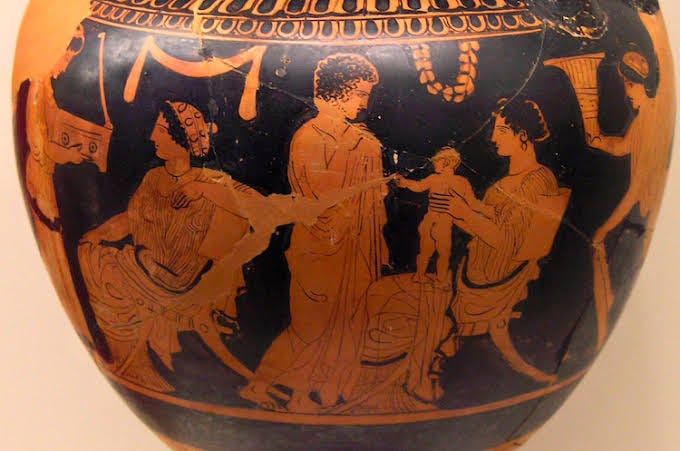
In Homer’s world, the family was understood very differently. The Greeks used the word oikos, often translated simply as “household,” but the word meant far more than a home or a collection of relatives. The oikos included the family, the land, servants, wealth, reputation, alliances, and the generations yet to come. It was the foundation of society, and its preservation was the first responsibility of its leader.
That idea lies at the heart of The Odyssey.
Odysseus does not spend twenty years trying to return to Ithaca simply because he misses home. During his absence, his oikos begins to unravel. His wealth is consumed by the suitors. His authority is questioned. His son grows up without him. His wife must defend the household against those who would seize it. Returning home is not simply a personal goal—it is an act of restoring order to everything entrusted to his care.
Once I began thinking about the oikos, I found myself looking at Philippe de Clermont differently.
One of the questions readers often ask is why Philippe demands so much from the members of his family. He arranges alliances, places enormous expectations on Matthew, and repeatedly asks individuals to sacrifice for the good of the de Clermonts. Read through a modern lens, those choices can feel controlling or even unfair.
Read through the idea of the oikos, they tell a different story.
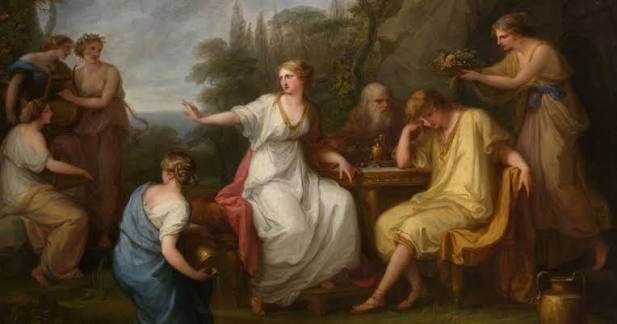
Philippe rarely thinks about one member of the family in isolation. His decisions are almost always measured against the future of the household as a whole. Alliances matter because they strengthen the family across generations. Marriages matter because they protect its future. Every choice is made with an eye toward what will preserve the de Clermonts long after he is gone.
That doesn’t mean we have to agree with his decisions.
But it does help explain them.
One of Deborah Harkness’s greatest strengths as a writer is her refusal to modernize Philippe. It would have been easy to create an immortal character who happened to have lived through history while thinking very much like a contemporary reader. Instead, she gives Philippe a worldview that remains rooted in the civilization that first shaped him.
He adapts to new languages, new countries, and new political realities, but his deepest assumptions about leadership and family remain remarkably consistent. His first instinct is almost always to ask what is best for the de Clermont household, even when the answer comes at great personal cost.
That way of thinking often places him at odds with Matthew.
Matthew values the family deeply, but he also struggles with expectations that seem to leave little room for individual choice. Their disagreements are not simply generational. They reflect two very different understandings of what family exists to do. Philippe sees himself as the guardian of something larger than any one person. Matthew increasingly sees the family as existing to serve the people within it.
Deborah Harkness never suggests that one perspective is entirely right and the other entirely wrong. Instead, she allows both worldviews to coexist, creating one of the richest and most emotionally complex relationships in the series.
Perhaps that’s why Philippe continues to fascinate readers.
He isn’t simply ancient because he has lived for three thousand years.
He is ancient because he still carries the values of the world that first taught him what it meant to lead, to love, and to protect a family.
Understanding the oikos doesn’t resolve every question about Philippe’s choices.
It does something much more interesting.
It reminds us that before we decide whether we agree with him, we should first understand the world that shaped him.
Read It Again
The next time you visit Sept-Tours, notice Philippe's conversations with Matthew and ask yourself a different question. Instead of wondering whether Philippe is being controlling, ask what responsibilities he believes come with leading a family that has survived for centuries. Once you begin reading him through the values of the ancient Greek world, some of his most difficult decisions become less surprising even if they remain open to debate.