

How understanding the values of ancient Greece changes the way we read one of Deborah Harkness’s most fascinating characters.
When we first meet Philippe de Clermont in Shadow of Night, it’s easy to focus on the obvious. He is powerful. Charismatic. Strategic. He commands loyalty from those around him and seems to carry the weight of centuries with effortless confidence.
Deborah Harkness tells us something else that is just as important, although it’s easy to overlook.
Philippe was born in ancient Greece.

That single fact changes the way I read him.
Not because I imagine him walking beside Odysseus or witnessing the events of The Odyssey. Rather, because it reminds me that Philippe’s earliest understanding of family, leadership, honor, and responsibility would have been shaped by a world very different from our own—a world remarkably like the one Homer describes.
It is tempting to think that living for three thousand years would eventually erase those early influences. Yet that isn’t how people work. Historians often remind us that the values we absorb when we are young become the lens through which we interpret the rest of our lives. We adapt to changing circumstances, but the foundations remain surprisingly durable.
Perhaps that’s why Philippe sometimes feels so different from the other de Clermonts.
Modern readers often judge him by modern expectations. We value independence, individual choice, and personal fulfillment. Philippe certainly understands those ideas—he has lived long enough to witness them emerge—but they are not the values that formed him.
The world Homer describes begins somewhere else.
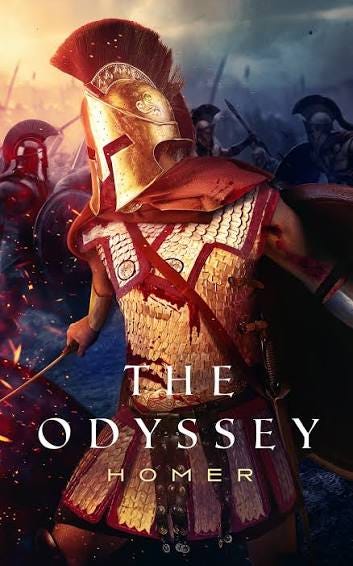
One of the central ideas in The Odyssey is that a leader’s first responsibility is the survival of the household. A king is expected to protect his people, preserve his family’s future, and make decisions that ensure the continuity of generations yet to come. Personal desires matter, but they are secondary to the stability of the household.
Read Philippe through that lens, and many of his decisions begin to look different.
He builds alliances that will outlast him. He thinks strategically about marriages. He prepares his children not simply for the next conflict, but for conflicts that may arise centuries later. He often asks individuals to sacrifice for something larger than themselves.
That doesn’t always make him easy to like.
It does make him easier to understand.
The same shift happens when we consider how Homer treats intelligence.
Modern retellings often emphasize Odysseus’s adventures—the Cyclops, the Sirens, the Trojan Horse. But Homer’s audience admired something deeper. Odysseus survives because he observes carefully, adapts quickly, and thinks several moves ahead. His greatest victories are intellectual before they are physical.
Philippe possesses that same instinct.
Throughout All Souls, he rarely relies on strength alone. He studies people. He anticipates their choices. He builds relationships long before he needs them. His understanding of politics is measured not in months or years, but in generations.
It is strategy as a way of life.
Perhaps the most revealing comparison, however, lies in Philippe’s understanding of love.
One of the most common criticisms of Philippe is that he sometimes appears emotionally distant. He asks difficult things of Matthew. He expects loyalty. He places extraordinary responsibilities on members of the de Clermont family.
Yet in Homer’s world, love and duty were rarely opposites.
To protect your household, arrange alliances, preserve your family’s future, and place the needs of the community above your own were all understood as expressions of responsibility. Affection certainly existed, but it was inseparable from obligation.
That ancient perspective doesn’t excuse every decision Philippe makes.
It does explain why his love often looks different from ours.
This, I think, is one of Deborah Harkness’s quietest achievements as a writer.
She doesn’t simply tell us Philippe has lived for three thousand years. She allows him to remain, in some essential ways, a man of the ancient Mediterranean. He speaks modern languages. He adapts to changing politics. He embraces science and scholarship. Yet the values that shaped him remain remarkably constant.
History isn’t something Philippe remembers.
It is something he carries.
Reading The Odyssey reminded me that great literature doesn’t only preserve stories. It preserves ways of thinking. The world Homer describes may feel distant, but its ideas continue to live in unexpected places, including the pages of All Souls.

The next time I read Shadow of Night or The Book of Life, I know I’ll see Philippe differently. I’ll still question some of his decisions, and I’ll still sympathize with the frustration his children sometimes feel. But I’ll also remember that Deborah Harkness didn’t create a man who merely lived through history.
She created a man who was shaped by it.
And that might be one of the reasons Philippe is one of the most compelling and powerful characters in the entire series.
Read It Again
The next time Philippe appears in Shadow of Night, listen carefully to the questions he asks before making a decision. Notice how often he thinks about strategy, reputation, alliances, and the long game rather than immediate solutions. Deborah Harkness doesn’t simply tell us Philippe was born in ancient Greece—she lets us see it in the way he thinks.