

The Phoenix is one of the most recognizable symbols of renewal, but in The Black Bird Oracle, Deborah Harkness gives it a meaning that is more complicated than simply rising from the ashes.
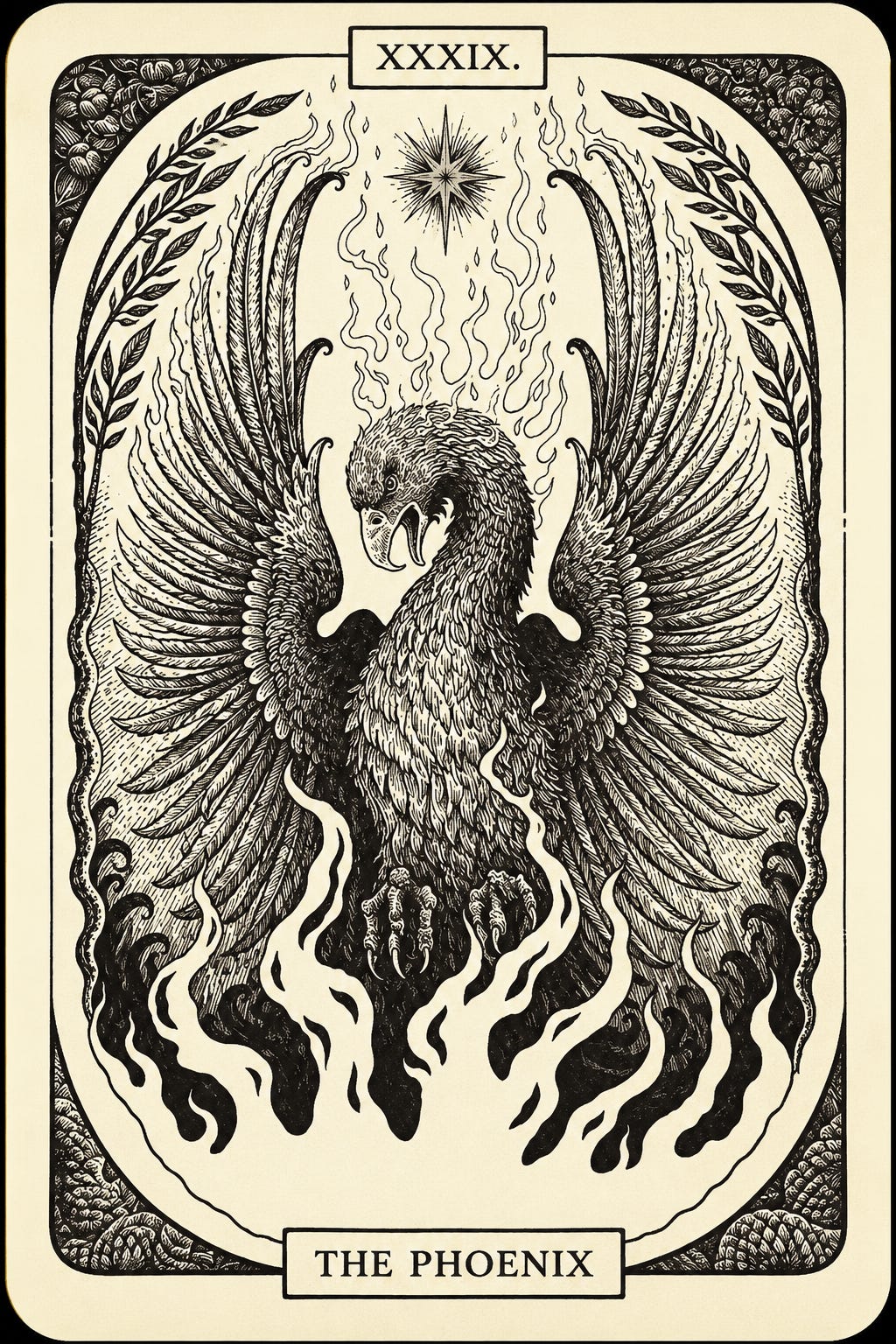
The card represents renewal, the present moment, and endings. It reminds us that beginnings and endings are rarely separate events. One often creates the conditions for the other, even when we cannot immediately recognize what is happening.
That made me think about how often characters in All Souls are given the opportunity to begin again—and how rarely those new beginnings allow them to escape the past entirely.
Jack may be one of the clearest examples.
When Diana and Matthew encounter him in Elizabethan London, Jack is a child whose life has already been shaped by loss and uncertainty. Their arrival gives him something he desperately needs: affection, protection, and a sense of belonging.
But that new beginning doesn’t last in the way he expects.
When Diana and Matthew return to their own time, Jack is left to continue a life that neither he nor they could have imagined. The centuries that follow bring experiences that profoundly change him, leaving him with a history of violence, manipulation, and grief.
By the time Jack is reunited with Matthew and Diana, the possibility of beginning again seems almost impossible.
He cannot become the child they remember. He cannot undo what happened during their absence, and the people who love him cannot simply remove the consequences of his past.
Yet his story suggests that renewal doesn’t require any of those things.
Jack’s second chance begins when he is finally able to imagine that his future might be different from the life he has already lived.
Marcus offers another perspective.
His transformation into a vampire during the American Revolution gives him an entirely new existence, but immortality doesn’t free him from the consequences of being human. His experiences with family, loyalty, leadership, and loss continue to influence the decisions he makes long after his human life has ended.
His efforts to create a different kind of family are particularly revealing. Marcus wants to build something that reflects his own values, but he discovers that good intentions don’t guarantee good outcomes.
Over time, he has to reconsider what it means to lead, to belong, and to take responsibility for people whose lives have become intertwined with his own.
His relationship with Phoebe offers another opportunity to imagine a future, but it isn’t a chance to erase everything that came before.
It is an opportunity to use what he has learned.
Phoebe’s story reverses that experience in an interesting way.
She chooses to become a vampire knowing that the decision will permanently change her relationship with the human world. Unlike Marcus, she has time to prepare, ask questions, and consider what she is giving up.
But preparation cannot eliminate uncertainty.
Phoebe must discover who she is becoming while maintaining a connection to the woman she was before her transformation. Her new life doesn’t simply replace her old one. It requires her to find a way to bring parts of both together.
And then there is Sarah.
Sarah’s story reminds us that renewal doesn’t always involve a dramatic transformation or a supernatural event.

The loss of Emily changes her life in ways that cannot be reversed. Their relationship was central to the home they built and the family they helped raise, and Sarah must eventually face a future that looks very different from the one she expected.
There is no magical solution to that kind of loss.
But Sarah continues to have relationships, responsibilities, and possibilities beyond her grief. Her story allows us to consider renewal not as forgetting someone we loved, but as discovering that life can continue to hold meaning after an irreversible change.
That may be the most interesting thing about The Phoenix.
We often imagine beginning again as a clean break. The old life ends, the new one begins, and everything that came before becomes part of a finished chapter.
But All Souls rarely works that way.
Jack carries his history into his reunion with his family. Marcus carries the consequences of his earlier decisions into his future with Phoebe. Phoebe brings her human identity into her vampire life. Sarah carries her love for Emily into a future Emily will not share.
None of them begins with an empty page.
Perhaps that is why the Phoenix is such a fitting symbol for this world.
The bird rises from the ashes of what came before. The ashes don’t disappear from the story. They are the very place from which renewal becomes possible.
And maybe that is the more interesting definition of beginning again.
Not becoming someone who has never been hurt, made mistakes, or lost something important.
But discovering that those experiences don’t have to determine everything that happens next.
Your Draw
Which character in All Souls deserves another beginning—and what would you most like to see them do with it?